


Nursing Jobs in the Gulf 2026
Nursing jobs in the Gulf in 2026 are still one of the fastest and most dependable international options for RNs. Monthly pay is often described as roughly tax-free, with UAE salaries around AED 8,000–14,000, Saudi Arabia about SAR 5,000–10,000, and Qatar roughly QAR 5,500–12,000. On top of that, many offers include free housing, transport, and an annual flight back home. Getting hired usually means you’ll need a recognised nursing licence (DHA, SCFHS, or QCHP), then pass the relevant licensing exam, complete Data Flow credential verification, and secure an employer-sponsored work visa. In practice, MAAI Workforce Solutions guides with the whole process often land somewhere around 3 to 6 months from applying to deployment.
So you’ve been checking recruitment pages for months, sending your CV in like it’s going nowhere, and you still don’t know which Gulf country pays what exactly, which licence to start with first, or if that “urgent hiring” post from a random agency is even real. Meanwhile, a colleague from your own hospital is already in Dubai or Riyadh, sending money home every month, and you’re thinking, okay, so what am I missing here?
Why Gulf Nursing Jobs Still Matter in 2026
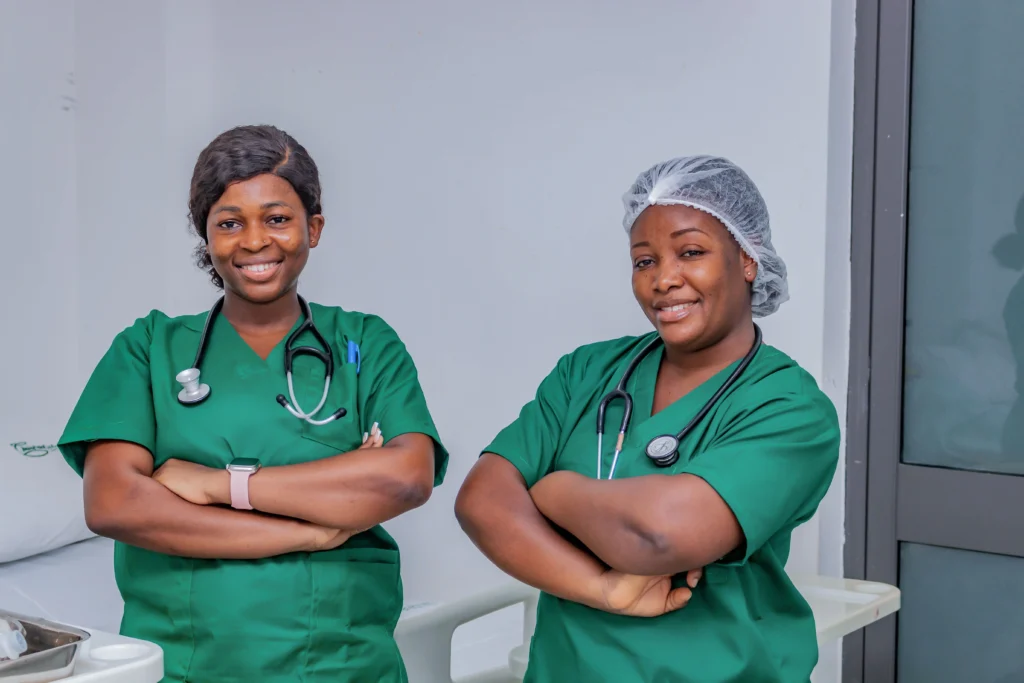
The short version: demand keeps rising quicker than the local workforce can cover. Saudi Arabia’s healthcare expansion under Vision 2030 has pushed hiring levels way up, and one training organisation recently shared that SCFHS onboarded over 8,200 healthcare trainees across 62 programmes in a single recent year. Then you add the UAE’s ongoing hospital growth, plus medical tourism, and Qatar’s smaller but well-funded tertiary hospital ecosystem. The result is a region that stays structurally short on qualified nurses. Especially for units like ICU, ER, OT, and dialysis.
RN Salary by Country: What You’ll Actually Get in Your Hands
You need to know the very first sentence: headline salary numbers rarely tell the whole story, because employers usually add accommodation, transit, insurance, and flights separately on top of the base rate.
| Country | Monthly Base Salary (Local Currency) | Approx. Range (USD) | Typical Add-ons |
| UAE (Dubai/Abu Dhabi) | AED 8,000–14,000 | ~$2,180–3,810 | Housing, transport, annual flight |
| Saudi Arabia | SAR 5,000–10,000 | ~$1,330–2,660 | Housing, transport, insurance, flight |
| Qatar | QAR 5,500–12,000 | ~$1,510–3,300 | Housing or allowance, insurance, flight |
Specialized roles (ICU, ER, OT, dialysis) generally sit well above these bands, and Saudi Arabia often produces the highest actual savings because of its lower cost of living relative to Dubai or Doha, even though its headline numbers look smaller on paper.
The Licensing Maze: DHA, SCFHS, and QCHP explained

Each Gulf country requires its own nursing license, and none of them really accept a licence issued for a different country unless you submit a fresh application.
1. UAE – Dubai asks for a DHA (Dubai Health Authority) licence, Abu Dhabi uses DOH, and the Northern Emirates run with MOHAP. A 2026 policy update (PQR Version 3) seems to have removed the older experience requirement for DHA licensing, so right now the UAE feels like the freshest, most friendly entry point in the Gulf.
2. Saudi Arabia – Licensing goes through the SCFHS (Saudi Commission for Health Specialties) via the Mumaris Plus platform, plus there’s a Prometric-based qualifying exam.
3. Qatar – Qatar handles licensing via the Department of Healthcare Professions (DHP), which is still often called QCHP from the past, and yes, it also uses a Prometric-based exam.
Also, every pathway requires Data Flow primary source verification — that’s a third-party check that contacts your university, previous licensing body, and even earlier employers to confirm your background. Important detail: a Data Flow report created for one regulator (for example, QCHP) can’t just be reused for another (like SCFHS or DHA); each destination needs its own separate report.
Step-by-step process to get a Gulf nursing job in 2026

1. Pick your target country based on licensing speed, speciality demand, and your savings plan (the UAE for the fastest fresher route, Saudi Arabia for broader job volume, and Qatar for a smaller and more organised market).
2. Start Data Flow verification for your chosen regulator – honestly, that step alone can take several weeks, so do it early
3. Register and sit the Prometric licensing exam (DHA, SCFHS, or QCHP/DHP); it’s a computer-based multiple-choice test offered at Prometric centres in many countries.
4. Complete the pre-departure medical test (GAMCA/Wafid for many nationalities), which includes a physical check and also screening for communicable diseases.
5. The employer processes your work visa/Iqama and finalises the travel and housing arrangements, so you do not really handle everything on your own.
6. Arrive, activate your licence, and begin work—most nurses say the whole thing is like 3 to 6 months from start to finish, depending on paperwork speed and the place.
A Realistic Example
Imagine a staff nurse making around ₹35,000 a month at a government hospital in India. A recruiter in Riyadh offers SAR 7,000 per month, which equals roughly ₹1.57 lakh tax‑free. Employers add housing and transport benefits, and they often include an annual flight as well. In real terms, that’s more money in one Gulf year than like two years of the equivalent home salary, even before counting savings from free accommodation and meals. This math is basically what has pulled hundreds of thousands of Indian, Filipino, Pakistani, and Jordanian nurses toward Saudi Arabia, the UAE, and Qatar over the past three decades. Check out our latest blog post on Civil Engineer Jobs in Saudi Arabia 2026
Top Hospitals Hiring Nurses in the Gulf Right Now
The biggest employers are usually large government or semi-government health systems, plus a few major private healthcare groups.
- UAE: SEHA (Abu Dhabi government health system), Cleveland Clinic Abu Dhabi, Sheikh Shakhbout Medical City, NMC Healthcare, Mediclinic, American Hospital Dubai
- Saudi Arabia: Ministry of Health hospitals, King Faisal Specialist Hospital & Research Centre, National Guard Health Affairs
- Qatar: Hamad Medical Corporation (HMC), Sidra Medicine
Licensing Costs & Requirements (Gulf 2026)
Getting licensed for a Gulf nursing role costs you around $200–500 out of pocket and takes about 3–6 months overall, but the breakdown actually drives the real impact. Data flow verification is usually the first fee you run into, and it’s non-negotiable, but yeah, the exact amount depends on your profile and the documents you already have.
- The Prometric exam fee only applies once Data Flow clears, so budget for it as a second-stage cost, not an upfront one.
- The medical fitness test (GAMCA/Wafid) is scheduled close to departure, not at the start of the process, so don’t pay for it too early.
- Legitimate Gulf employers cover visa and deployment costs, so you should treat any recruiter who asks you to pay for this step as a red flag.
- Total timeline of 3–6 months assumes no delays in document verification, which is the single biggest variable affecting how fast you actually deploy.
Ready to Start Your Gulf Nursing Career?
Choose your target country based on your specialty plus what you want to save; start your DataFlow verification earlier rather than later; and handle each part kind of methodically—it’s a workflow that rewards patience and precision more than quick fixes. If you’re stuck comparing UAE versus Saudi Arabia versus Qatar for your first move, contact us and begin by shortlisting two or three active vacancies in each market, then compare the entire offer, not only the starting salary.
FAQ
Q1 Which Gulf country pays nurses the most?
The UAE generally shows the highest headline salaries, especially for specialised ICU, ER, and OT roles in Dubai and Abu Dhabi, though Saudi Arabia can still lead on real savings because living costs may be lower.
Q2 Do I need IELTS or OET to work as a nurse in the Gulf?
Most employers and licensing bodies ask for IELTS Academic (usually 6.0–6.5) or an equivalent OET score. Some may waive it for nurses coming from English-medium nursing programs—but always confirm with the specific regulator, not a random contact.
Q3 How long does the whole process take?
Most nurses get from application to deployment in about 3 to 6 months, so the Gulf ends up being one of the quickest major international nursing pathways compared with the UK, Canada, or the US.
Q4 Can I use my DHA license to work in Qatar or Saudi Arabia?
No. Each regulator, like DHA, SCFHS, or QCHP/DHP, needs its own separate licence and its own Data Flow verification report too.
Q5 Is it normal to pay a recruitment agency for a Gulf nursing job?
No. Legitimate Gulf employers cover recruitment and visa costs. Always verify any agency through your home country’s labor ministry (for example, POEA/DMW in the Philippines or eMigrate in India) before paying anything, ever.